Day 1
Sixteen servos on pre-order
Day one: what XGO-Duck is, why we are building one, and the parts list turned into UK shops and prices. The servos alone are most of the bill.
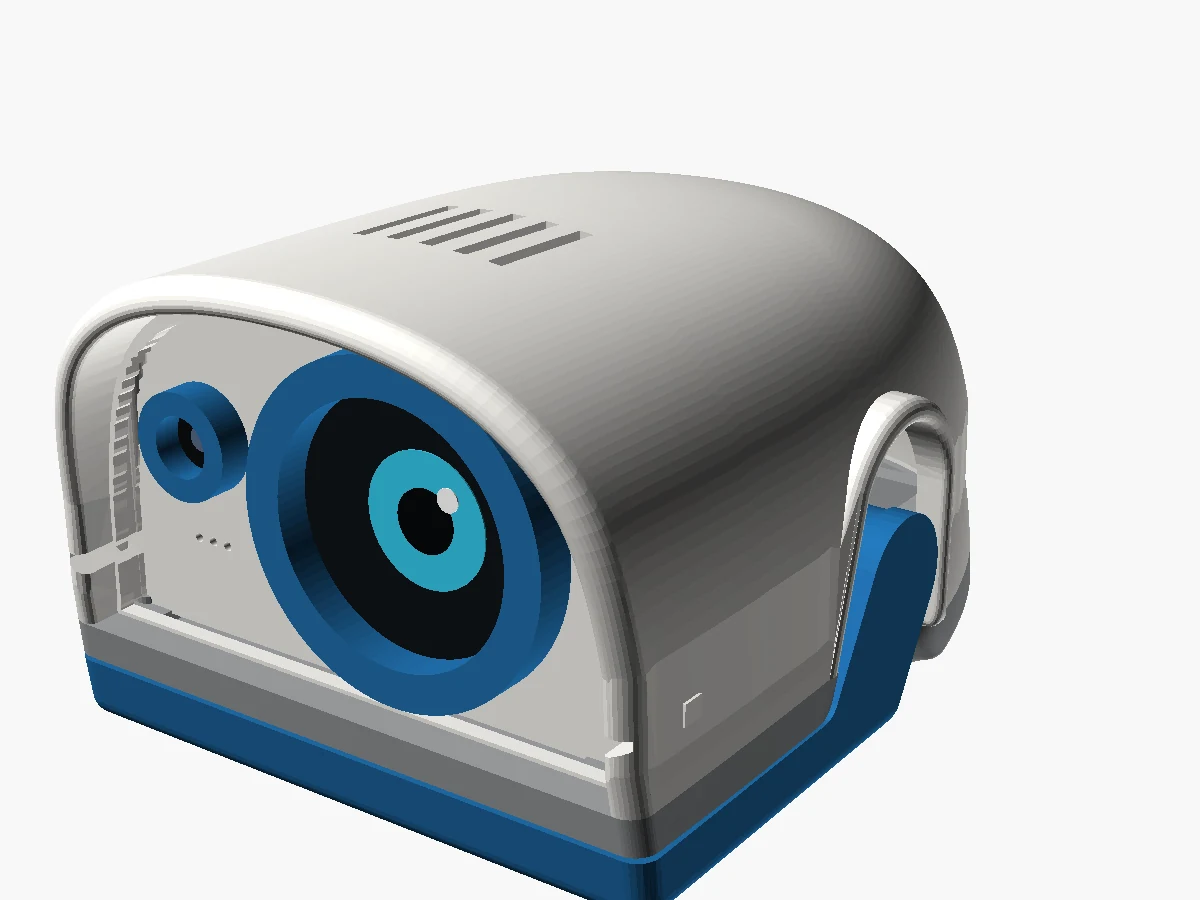
XGO-Duck is a small two-legged robot you print yourself. It's Luwu Dynamics' version of Pollen Robotics' Microduck: fifteen bus servos, an Arduino UNO Q for a brain, and walking that comes from a trained policy rather than hand-written gaits. Luwu say it walks, gets up and picks things up with the policies that ship with it, with no training needed.
It's also very new. When we started, Luwu's own roadmap said no independent build had been finished yet, and the battery details, print profiles and licence were still being settled. That's the reason for this diary: if we're early, the notes might save the next person some time.
Turning the parts list into UK shops
The project's parts list assumes you can buy a Feetech kit in one go. From the UK it splits five ways:
- Servos from OpenELAB in Europe, on pre-order with a restock due about 23 October.
- The driver board and battery from Luwu's own shop.
- Bearings from a UK stockist on eBay, because Amazon UK doesn't sell the 16 × 22 × 4 mm size at all.
- Screws from Amazon UK.
- Filament from Bambu, for the blue.
The servos are most of the money. We bought sixteen, one spare, at €32.95 each, which is about £460 before postage. The exact model matters: the HD-1910-C001 is coreless with a 12-bit magnetic encoder and talks on a 1 Mbit/s TTL bus. Other servos sold as "1910" may not speak the same protocol. We added Feetech's little FE-URT2 test board so each servo can be checked from a computer before it goes anywhere near the robot.
The full list, with what we've paid so far, is on parts and costs.
Small traps in the list
- The foot bearing is a 61700, which is 10 × 15 × 3 mm. A 6700 has the same bore and outside but is 4 mm thick.
- The servo output screws are M2.3 × 8 pan heads, not the M2.5 × 6 in the servo's own datasheet.
- The list has fifteen separate servo leads, but OpenELAB sells each servo as "1 x servo". Check what's in the box before buying leads.
Changing the head
The standard duck has a small printed eye. We want it to see, hear and talk. The first idea was a tiny 0.71" round screen in place of the printed eye, but the face only has about 42 mm of height to play with, so we went bigger and redesigned the face round it. The head gets a 1.28" round screen for one eye and a Seeed XIAO ESP32-S3 Sense behind the other, with its camera and microphone, plus a small speaker. The XIAO does its own Wi-Fi, so only power and a couple of data wires need to go down the neck.
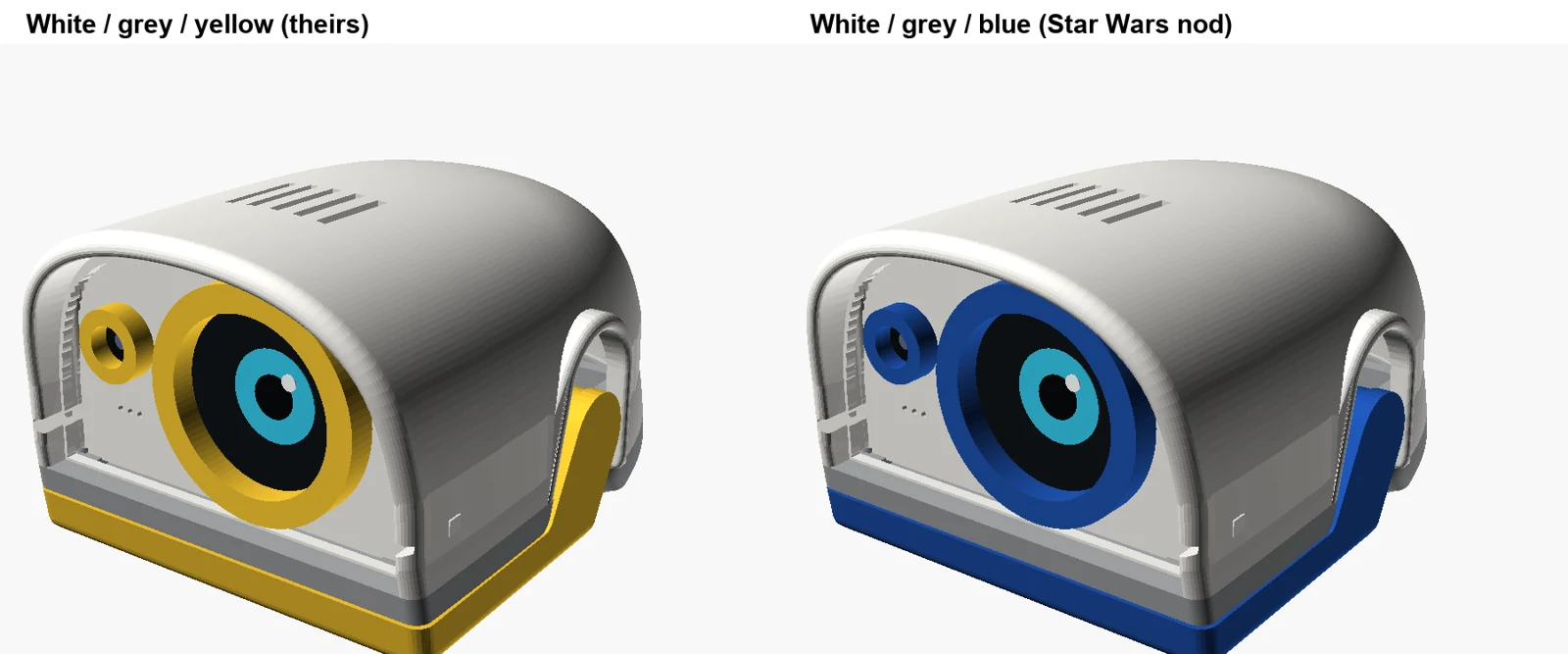
Next: turning Luwu's 27 STLs into one print file.